
Voles vs. Moles in Washington: How to Tell the Difference
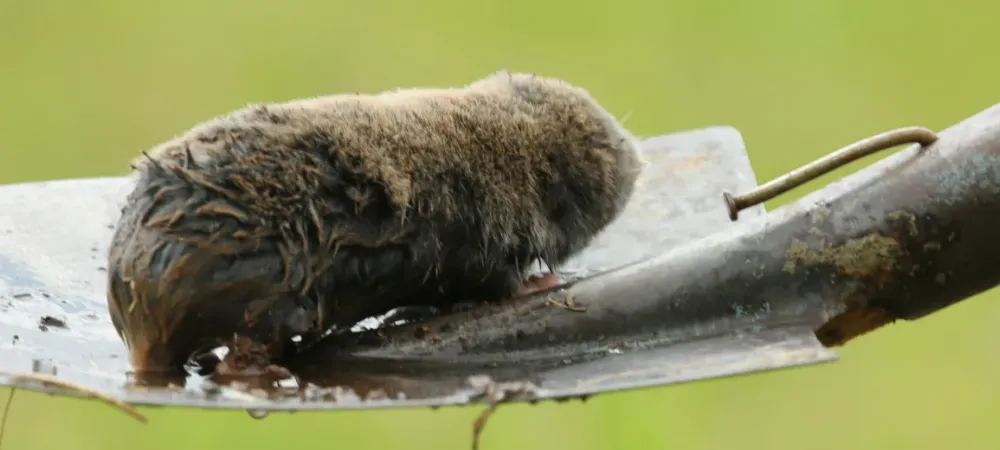
Quick answer: Moles and voles are easy to mix up, but they're very different animals. Moles are insect-eaters with tiny eyes, no visible ears, and huge, shovel-like front feet. They push up volcano-shaped mounds of dirt. Voles are small, mouse-like rodents with visible eyes and ears. They eat grass, roots, bulbs, and bark, and they leave narrow surface runways and small open holes instead of mounds. In Washington, both are common, and they often share the same tunnels.
If your lawn suddenly has trails, holes, or piles of dirt, it's natural to assume you have moles. In Western Washington, that's often true. But voles also cause a surprising amount of lawn and garden damage, and people often mistake them for moles.
Knowing which one you're dealing with matters. Moles and voles eat different things, damage your yard in different ways, and need different control methods. Below, we'll walk through how to tell them apart, what their damage looks like, and how to protect your yard.
What's the Difference Between a Vole and a Mole?
The biggest difference is what they are. Voles are rodents, closely related to mice. Moles aren't rodents at all. They're insectivores, more closely related to shrews, and they spend nearly their entire lives underground.
Voles vs. moles at a glance:
- Body: Moles are 4 to 9 inches long with velvety, gray-to-black fur. Voles are 5 to 8 inches long and look like stocky, short-tailed mice.
- Eyes and ears: Moles have tiny, weak eyes and no visible ears. Voles have small but visible eyes and ears.
- Front feet: Moles have huge, paddle-shaped front feet with stout claws for digging. Voles have small front feet like a mouse.
- Tail: Moles have short, pink tails while voles have dark tails
- Diet: Moles eat earthworms, grubs, and insects. Voles eat grass, roots, bulbs, seeds, and bark.
- Damage: Moles leave mounds and raised ridges. Voles leave surface runways, small open holes, and chewed plants.
Diet is the key to most of the confusion. Moles rarely eat plants. When bulbs, vegetables, or young trees are being eaten from below, voles are usually to blame.
How to Tell Vole Damage From Mole Damage in Your Lawn
The easiest way to tell voles from moles is to look closely at the damage. Each animal leaves a very different pattern in the lawn.
Signs of moles:
- Volcano-shaped mounds. Molehills are typically 6 to 24 inches across and 2 to 8 inches high.
- Raised ridges. Moles dig shallow feeding tunnels just below the surface, leaving long, 1- to 3-inch-wide ridges of raised soil.
- Spongy, uneven turf. Surface tunnels can make the lawn feel soft underfoot.
- No chewed plants. Mole damage is mostly cosmetic. The grass itself isn't eaten.
Signs of voles:
- Surface runways. Voles clip grass down to the soil, creating narrow paths about 1 to 2 inches wide that wind through the lawn.
- Small, open holes. Vole burrow entrances are usually open holes about ¾ inch to 2 inches across, without a pile of dirt.
- Missing bulbs and roots. Tulips, lilies, and vegetables may wilt or disappear from below.
- Chewed bark. Look for tiny tooth marks on the base of trees and shrubs.
Vole runways are often easiest to spot after a period of cover has been removed, like when leaves are raked up or snow melts. Runways are especially common in areas that had long-lasting snow cover. In the Puget Sound's milder lowlands, look for them under leaf piles, along fences, and next to dense landscaping where voles feel hidden.
Why Do Molehills Show Up in the Fall?
If your lawn seems to sprout new molehills every October, you're not imagining it. Moles follow the moisture. Mole digging "is most pronounced in fall and winter when the soil is moist." Moles are therefore most active after rain, which is a common occurrence in our area.
That makes Western Washington lawns a perfect match for moles. Once the fall rains return, the soil softens and earthworms move closer to the surface. Moles follow their food, digging new feeding tunnels and pushing up fresh mounds as they go. While moles are active year-round but "most noticeable and do the most damage during spring and fall."
Moles don't eat your grass, but they can still do real damage to a lawn. Fresh mounds smother the turf underneath, raised tunnels leave the yard lumpy and uneven, and the loose soil makes mowing a hassle. For homeowners who have put time and money into their landscaping, that damage adds up quickly.
How Fast Do Moles and Voles Spread?
Moles and voles grow their populations in very different ways, which affects how quickly damage spreads across your yard.
Moles vs. voles, by the numbers: Moles have a single litter of three to five young each year, and the young "disperse above ground at night during the month after weaning." Voles breed much faster. WSU Extension notes that vole populations go through "explosions" every 3 to 5 years, sometimes reaching "more than 1,000 voles per acre."
Because moles reproduce slowly, a mole problem rarely goes away on its own. The same moles, and their young, tend to stay in the same areas year after year as long as the soil is rich in earthworms and grubs. That's why mole damage often shows up in the same parts of the lawn every fall and spring.
Voles are more boom-and-bust. A yard with a few runways one year may be crisscrossed with trails the next. They also cause more damage to plants, voles feed on the bark and roots of woody plants during winter. When voles chew all the way around the base of a young tree, it's called girdling, and it can kill the tree.
How to Protect Your Yard From Moles and Voles
Protecting your yard starts with knowing what you're up against. Once you've identified moles, voles, or both, you can focus on the approach that actually works for that animal.
Why Don't Mole Repellents and Home Remedies Work?
Many homeowners try repellents, castor oil, or poison baits before calling a professional. Unfortunately, most of these don't solve the problem. According to WDFW, "no repellents currently available will reliably protect lawns," and "poisoned baits have proven to be ineffective on moles."
There's a simple reason poison baits don't work well. Moles eat earthworms and insects, not grain or seeds, so they rarely take baits designed for rodents. Poison baits left in the yard can also put pets, birds, and other wildlife at risk.
Steps that help reduce mole and vole damage:
- Act early in the season. Concentrate mole control efforts in late winter, before young moles are born in spring.
- Monitor for fresh mounds. New mounds after a rain show which tunnels are active.
- Keep your lawn mowed. Short grass leaves voles exposed and makes their runways easier to spot.
- Limit thick mulch. Mulch shouldn't be any more than two inches deep, since heavy mulch gives voles cover.
- Protect young trees. Use cylinders of ¼-inch hardware cloth, buried 6 to 10 inches deep, around the base of young trees to stop vole damage.
How Professionals Can Help
At Sound Pest Control, we know how frustrating it is to watch your lawn get torn up, especially when you're not sure what's causing it. The first step is always figuring out whether you're dealing with moles, voles, or both.
Here's how we help Puget Sound homeowners take back their yards:
- A free lawn evaluation. One of our trained technicians will look at the mounds, tunnels, and damage in your yard to confirm that moles are the cause and how serious the problem is.
- Eco-friendly help. Our mole and vole control service is an environmentally friendly, preventative method that eliminates burrowing moles without the toxic rodenticides that can harm pets and wildlife.
- No illegal traps or guesswork. We handle mole control safely and in line with Washington's rules, so you don't have to figure out which traps are allowed.
- Honest advice. If voles are part of the problem, we'll explain what we're seeing and walk you through the best next steps for your yard.
- No long-term contracts. We offer no-contract options, including one-time services for quick relief.
If you're noticing signs of voles or moles in your yard, contact Sound Pest Control today to schedule a free inspection.